Double-Coated Breeds: The Complete Care Guide
Two coats in one — a plush insulating undercoat under a weatherproof topcoat. Here's how it works, why groomers beg you never to shave it, and the routine that keeps it glorious instead of everywhere.
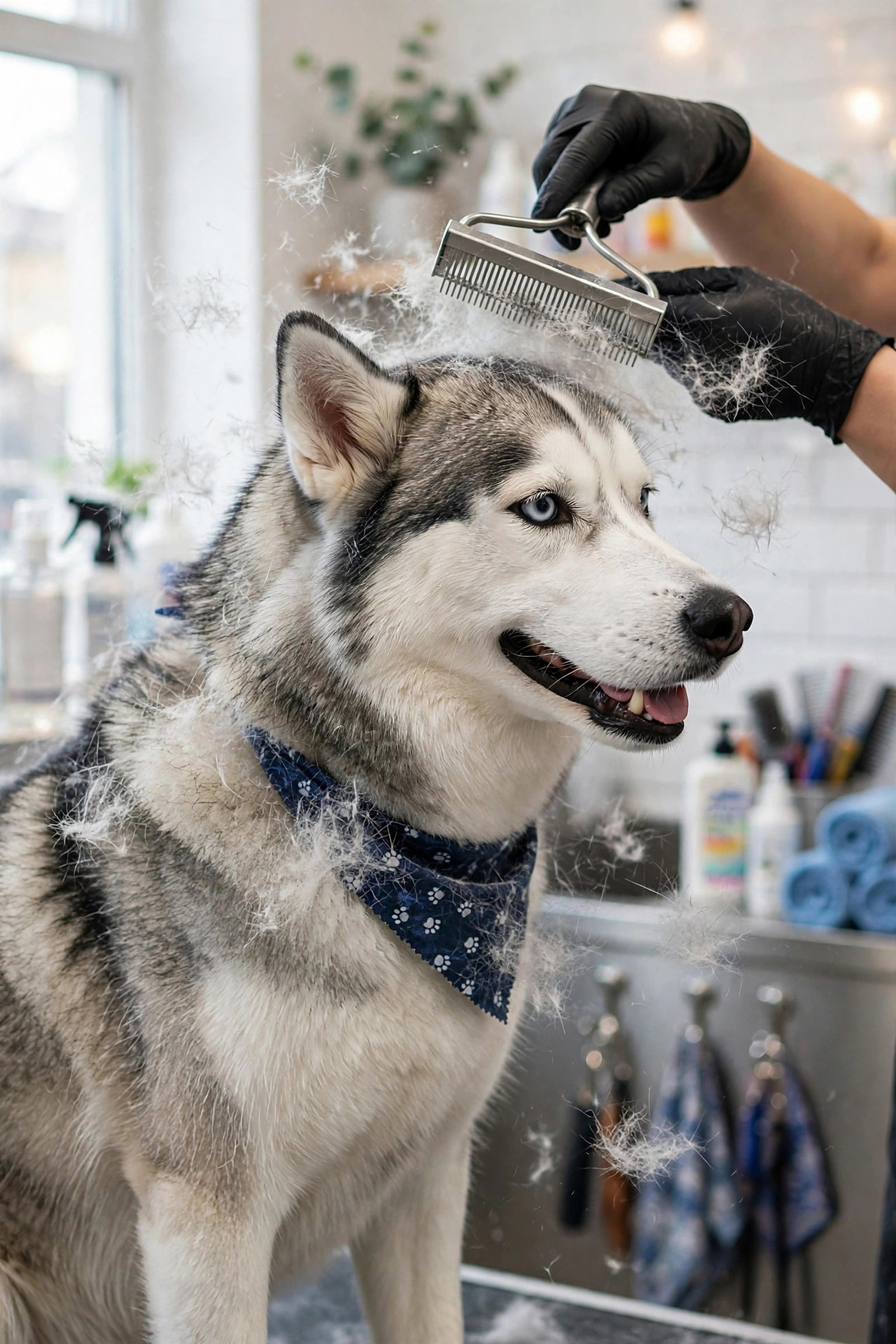
What is a double coat, exactly?
A double coat is two distinct layers of hair doing two different jobs. The undercoat is short, soft and dense — think of it as the dog's thermal underwear. It traps air against the skin and insulates in both directions: keeping body heat in during winter and, just as importantly, keeping hot air out during summer. The topcoat (or guard coat) is longer, coarser and slightly oily. It sheds rain, resists dirt, protects the skin from sunburn and brush scrapes, and gives the dog its breed silhouette.
The two layers also grow on different cycles. Topcoat grows slowly and lasts; undercoat turns over fast and seasonally. That mismatch is the root of almost every double-coat grooming issue — and most of the myths. Common double-coated breeds include the Siberian Husky, Alaskan Malamute, Golden Retriever, Labrador Retriever, German Shepherd, Australian Shepherd, Border Collie, Pomeranian, Chow Chow, Samoyed, Shetland Sheepdog, Shiba Inu and Akita. If your dog leaves tumbleweeds of fluff twice a year, you're in the club.
Why you should never shave a double coat
Every summer, well-meaning owners ask for their Husky or Golden to be shaved "to keep them cool" or "to stop the shedding." Professional groomers push back on this for solid, physical reasons:
- It doesn't stop shedding. The undercoat still grows and sheds — just shorter. You'll have tiny, spiky shed hair instead of long fluff, and it will embed itself in fabric even better.
- It removes the insulation. That trapped-air layer is the dog's air conditioning. Shaved down, the skin is exposed directly to sun and heat, and dogs overheat faster, not slower — plus they sunburn.
- It can permanently damage the coat. When both layers are cut to the same length, the fast-growing undercoat can crowd out the slow-growing guard hairs. The coat that grows back is often patchy, woolly and dull — a condition groomers call coat funk or post-clipping alopecia. In some dogs, especially Pomeranians and other Nordic breeds, the guard coat never fully returns.
- It ruins the coat's self-cleaning design. Dirt that used to slide off the slick guard hairs now sticks in exposed undercoat, so a shaved double coat often gets dirtier faster.
The exceptions are medical: surgery prep, treating severe skin disease, or a coat so compacted with dead undercoat and mats that a vet or groomer judges a reset necessary for the dog's comfort. That's a clinical decision, not a summer haircut. For heat relief, the real answers are shade, water, cool indoor rest during peak heat, and keeping the undercoat brushed out so air can move through it. A well-maintained double coat is the coolest version of that dog.
The brushing and deshedding routine
Day to day, double-coat care is simple: one thorough brush-out per week. Work in sections with a slicker brush, then an undercoat rake to pull loose undercoat from the dense areas — neck ruff, back legs ("pants"), tail and behind the ears. Finish with a steel comb; if the comb slides through, you're done. Ten to fifteen minutes keeps a Golden or Shepherd in great shape.
Then come the seasonal blowouts. Twice a year — usually spring and early autumn, triggered by daylight length more than temperature — the undercoat lets go all at once. For two to four weeks your dog will produce laundry baskets of hair. During a blowout:
- Brush every second day, outside if you can. Birds will thank you — undercoat is premium nest material.
- Bathe mid-blowout (see below) — warm water and a proper blow-dry releases more undercoat in one session than a week of brushing.
- Never brush a packed coat dry and angry. If the undercoat has compacted into felt, work slowly with the rake in small sections, or book a professional deshed bath before it becomes a skin problem.
🧰 Tool check: the double-coat kit is a slicker brush, an undercoat rake, a steel comb, and — the game-changer — a high-velocity dryer. Full breakdown in our grooming tools guide.
Bathing a double coat (without wrecking it)
Double coats need bathing every 4–8 weeks — less often than most people expect. Over-bathing strips the guard coat's natural oils and softens the texture. When you do bathe, technique matters more than products:
- Brush first. Water tightens loose mats and felted undercoat. Never put a tangled double coat straight into the tub.
- Soak to the skin. The water-repellent topcoat is doing its job — it can take several minutes before a Husky is actually wet underneath.
- Shampoo twice, rinse forever. Diluted dog shampoo worked down to the skin; then rinse until the water runs completely clear, and rinse once more. Soap residue is the #1 cause of post-bath itching and dandruff flakes.
- Condition during shedding season. A deshedding conditioner helps release undercoat; let it sit 5 minutes before rinsing.
- Dry like you mean it. A high-velocity dryer on a cool setting blows water and loose undercoat straight out of the coat. This single tool is the difference between amateur and professional results on a double coat. Towel-drying alone leaves a damp undercoat that smells musty within days.
Coat care by breed
Siberian Husky / Malamute: The heaviest blowouts in the business. Weekly brushing, dryer-assisted baths every 6–8 weeks, and a professional deshed twice a year during peak shed saves your sanity. Golden Retriever: Moderate undercoat, famous feathering — brush weekly and keep feathers combed so they don't mat behind ears and legs; tidy trims on feet and feathers every 8–12 weeks. German Shepherd: Sheds year-round with two big seasonal peaks ("German Shedder" is earned). Rake weekly, watch for a compacted "pants" area, and deshed baths every 6–8 weeks. Pomeranian: A huge coat on a small dog — brush 2–3 times a week to the skin to prevent the undercoat from felting into a solid shell, which is the usual reason Poms end up shaved. Keep sessions gentle and short.
Your Double-Coated Dog, On a Schedule
Tell our free calculator the breed and it will set the brushing, bathing and deshed rhythm for your dog's exact coat — plus a printable plan.
Get My Dog's Schedule 🐶Keep reading: How Often Should You Groom Your Dog? · Grooming Tools Guide · Matted Coat Guide · All guides